
 Chicago Schools Boycott Flyer “Freedom Marchers Wanted”, 1963A flyer from the 1963 Chicago Public Schools Boycott. Source: Chicago SNCC (Student Nonviolent Coordinating Committee) History Project Archives, Harsh Research Collection.

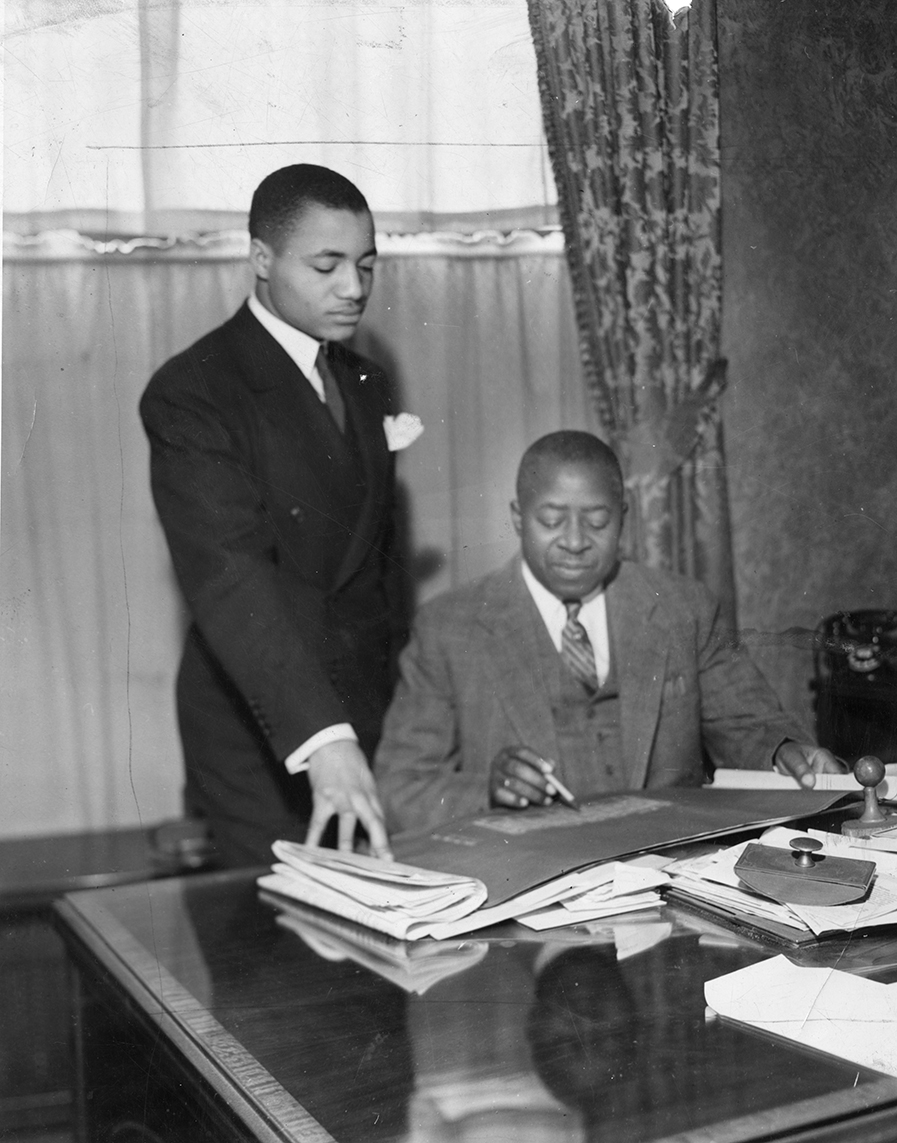
 John Sengstacke, standing, and Robert Abbott, circa 1935Abbott’s nephew, John H. Sengstacke, took over the Defender after the death of his uncle in 1940. He went on to establish the Michigan Chronicle and other news publications. He also founded what is now called the National Newspaper Publishers Association. Source: Abbott-Sengstacke Family Papers, Box 27, Photo 2086, Harsh Research Collection.
 “Protest at the Polls” flyer, 1963.Flyer, “Protest at the Polls,” 1963. Source: Timuel D. Black, Jr Papers, Harsh Research Collection.

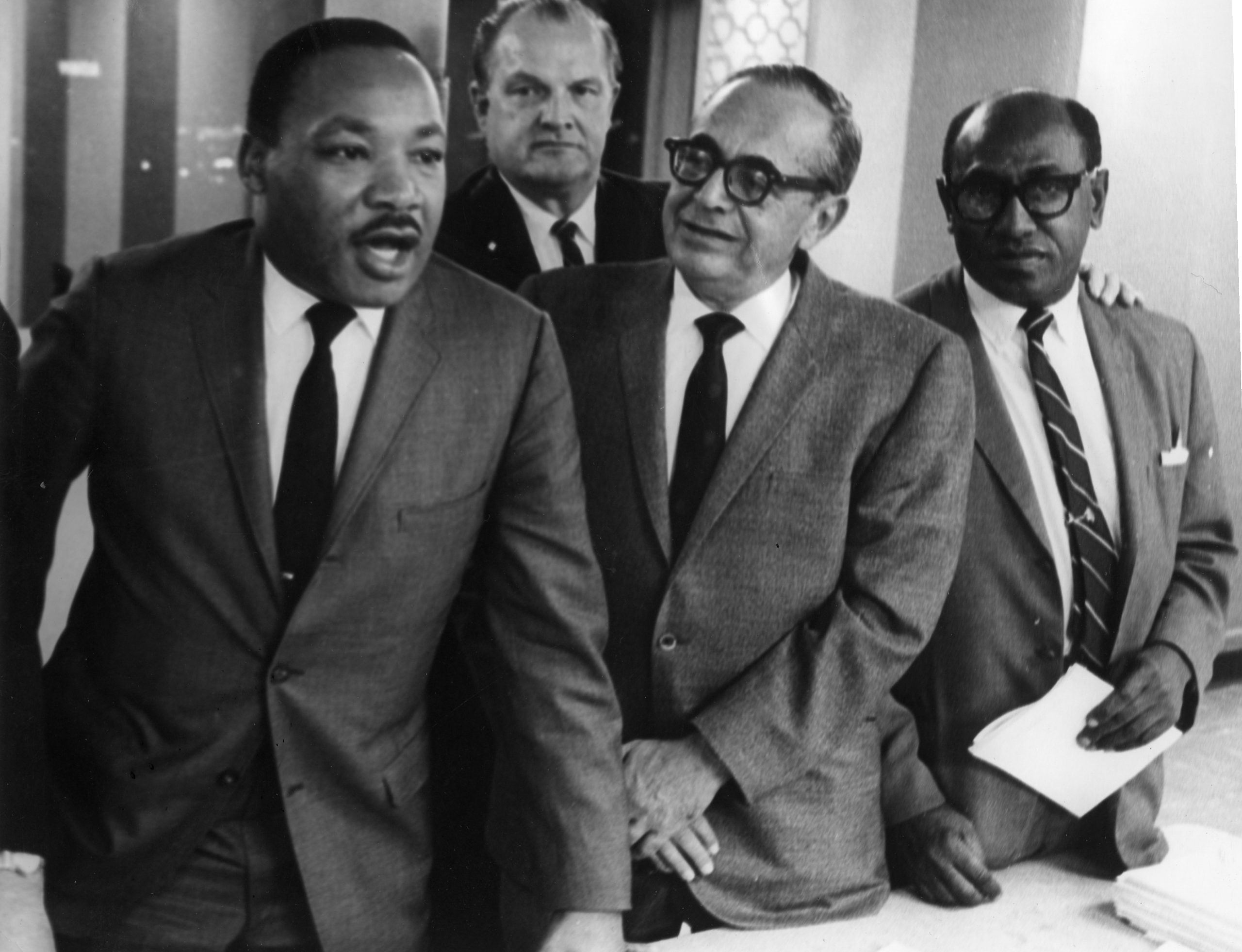
 Timuel Black with Martin Luther King, Jr., circa 1965Timuel Black with Martin Luther King, Jr., circa 1965. Source: Timuel D. Black, Jr. Papers, Box 209, Photo 1011, Harsh Research Collection.
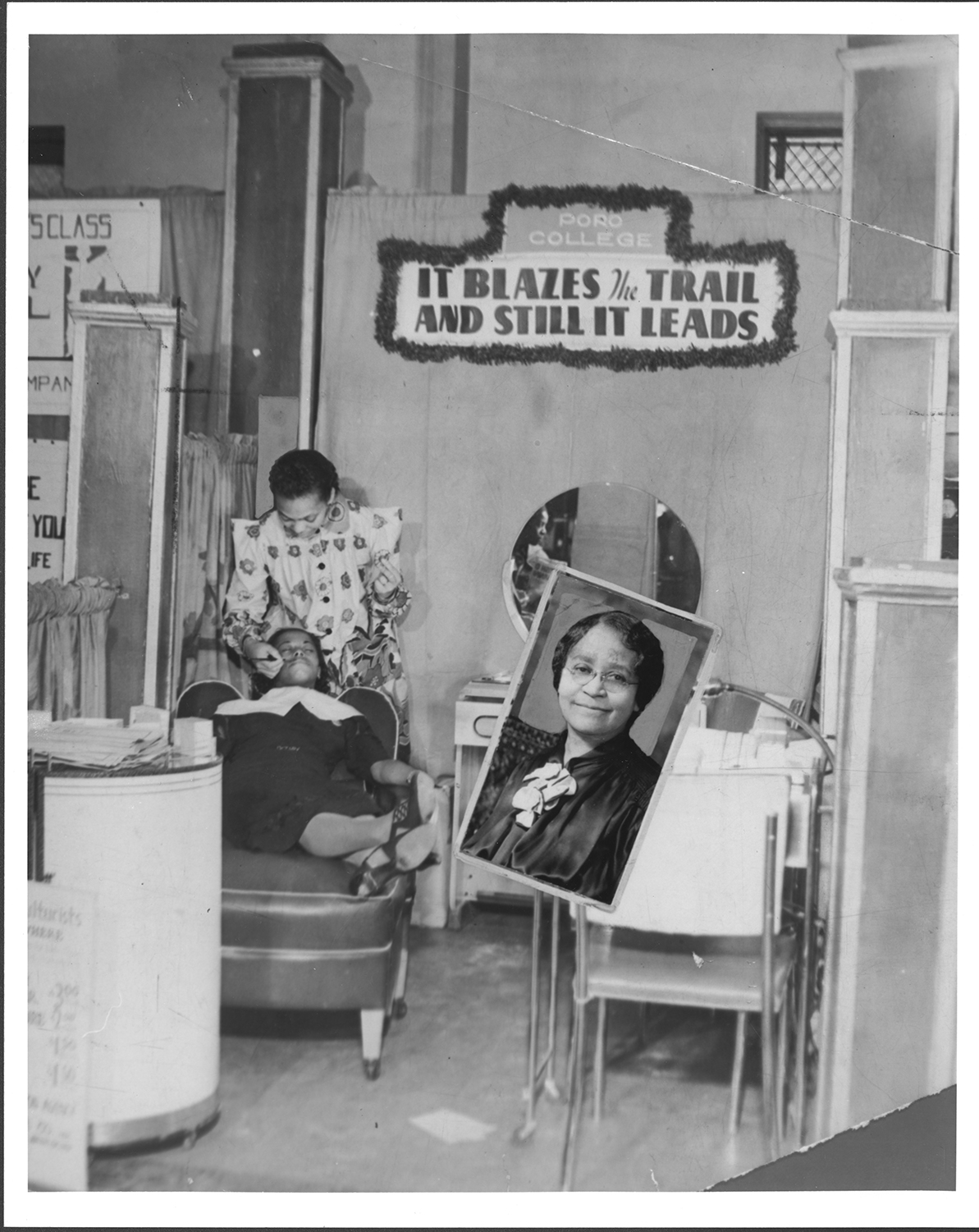
 Poro College booth at trade show, demonstrating cosmetic techniques, with inset photo of Annie Turnbo Malone, Chicago, 1939Poro College booth at trade show, demonstrating cosmetic techniques, with inset photo of Annie Turnbo Malone, Chicago, 1939. Source: Marjorie Stewart Joyner Papers, [Box 48, 445], Vivian G. Harsh Research Collection.
February is Black History Month and I can think of no better way to celebrate than to share one of Chicago Public Library’s greatest treasures: the Vivian G. Harsh Research Collection. Located at the Carter G. Woodson Regional Library, the Harsh Research Collection contains manuscripts, books, photographs, and other archival materials documenting Black history in Chicago, Illinois, and the Midwest.
Never been? Let me paint you a picture. Step inside, and you’ll encounter a large public reading room anchored by the breath-taking, two-story Richard Hunt sculpture Jacob's Ladder. On nearly every wall you'll find public art by artists like Kerry James Marshall, Charles Searles, and Willie Cole. Portraits memorializing Vivian Harsh, former head of the Hall Branch and the founder of the collection; Carter G. Woodson, the “Father of Black History”; and Charlemae Hill Rollins, the children’s librarian who fought against stereotypical depictions in children's literature, look out over all who enter. Don't forget to stop by our exhibit gallery. Currently on exhibit: Praise and Protest: Voices from the Chicago Black Renaissance.
After all of that, you’d still only be scratching the surface. Housed in closed stacks and stewarded by our librarians and archivists, the Harsh Research Collection also boasts 250+ manuscript collections, a reference collection focused on Black history, culture and literature, and back-issues of periodicals like Negro Digest, Ebony, The Crisis, and The Journal of African American History.
It's no surprise researchers from all over the city, country and world visit to work with these materials, discovering rare primary source documentation of Black Chicago. Ever wonder what they’re looking at? In 2025, the most accessed archival collections were:
5. (tie) Abbott-Sengstacke Family Papers
Robert S. Abbott founded the Chicago Defender in 1905 and his nephew John H. Sengstacke took over the family’s newspapers upon Abbott’s death in 1940. The papers trace the Abbott-Sengstacke family history from the mid-19th century in Georgia through Abbott’s move to Chicago and creation of a journalistic empire, to the death of Sengstacke in 1997 and include documentation of the National Newspaper Publishers Association, the Chicago Defender, the Pittsburgh Courier, the Michigan Chronicle, Provident Hospital and the political history of Chicago.
4. (tie) Marjorie Stewart Joyner Papers
Marjorie Stewart Joyner was national supervisor of Madame C.J. Walker Beauty Colleges, chair of Chicago’s Bud Billiken Parade and Chicago Defender Charities, benefactor of Bethune-Cookman College and an activist in the Democratic Party in Chicago.
3. Era Bell Thompson Papers
Author of American Daughter and Africa, Land of My Fathers, Era Bell Thompson was a photojournalist for Ebony and an international editor for Johnson Publishing Company for more than 30 years.
2. Timuel D. Black, Jr. Papers
Historian, author, human rights activist and expert on Chicago’s African American history. During the 1960s, he was president of the Negro American Labor Council, Chicago Chapter and organizer of Chicago participation in the 1963 March on Washington. Black was active in more than 100 organizations over seven decades.
1. Chicago SNCC (Student Nonviolent Coordinating Committee) History Project Archives
The Chicago SNCC (Student Non-Violent Coordinating Committee) History Project was created in 2005 to collect and preserve the experience of SNCC during the civil rights movement in Chicago.
Happy Black History Month. Maybe we’ll see you at Harsh!
The Vivian G. Harsh Research Collection is open Tuesday through Thursday from 1:00-5:00pm and on the 3rd Saturday of the month from 1:00-4:00pm. Archival collections are accessible by appointment. Reference assistance is also available by phone at (312) 745-2080 and email at harshcollection@chipublib.org.

Add a comment to: Celebrate Black History Month: Vivian G. Harsh Research Collection