
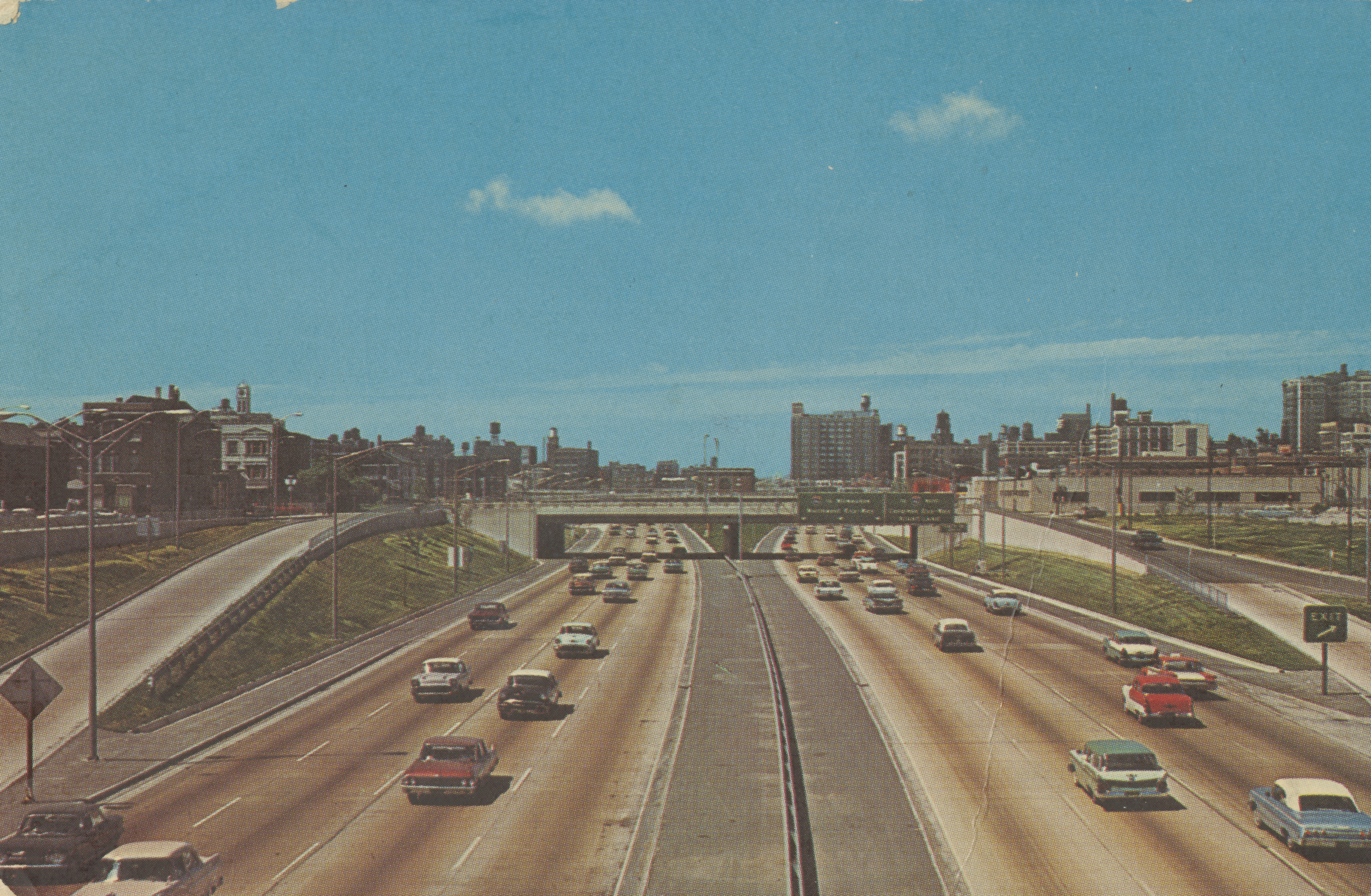
Chicago Postcard Collection, Box 4, Postcard 1.1921, Special Collections, Chicago Public Library.
Chicago, often called the Crossroads of America, has a reputation that originates not only from its railroads and airports but also from its extensive network of expressways. Since the 1950s, these expressways have had a significant influence on our daily lives, commuting patterns and regional development. The roots of Chicago’s major roadway development plans can be traced back to Daniel Burnham’s 1909 Plan of Chicago.
Expressways, which emerged as a standout feature of mid-20th-century America, transformed cities, lifestyles and expectations in response to the rise of the automobile. Following World War II, suburbanization surged, and car ownership became a symbol of modern prosperity. The central expressway system, which includes the Edens, Eisenhower, Kennedy, Dan Ryan, and Stevenson Expressways, formed the backbone of a new metropolitan landscape. However, these expressways displaced businesses, low-income residents and people of color whose homes were in their development path.
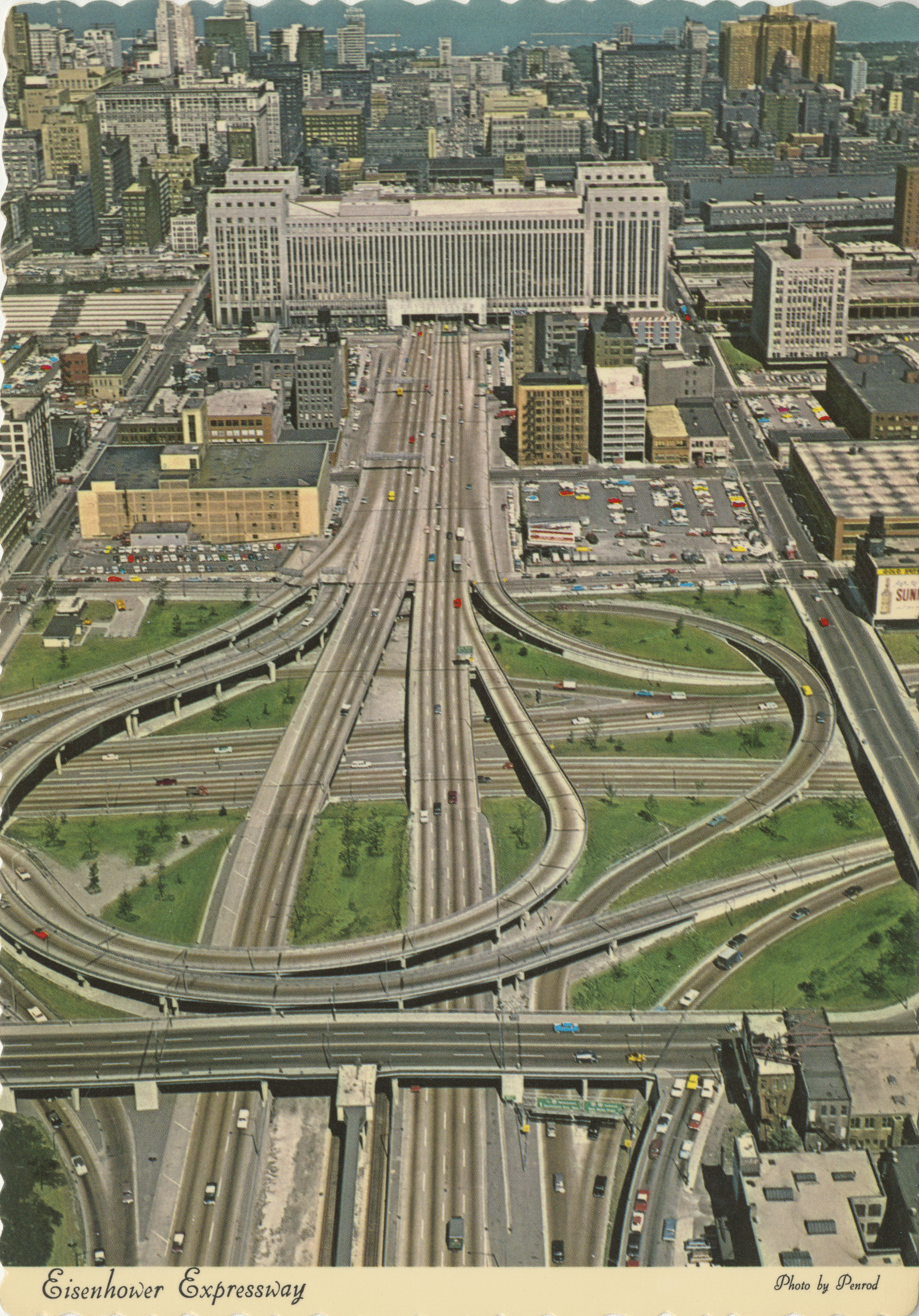
The William G. Edens Expressway (Interstate 94) opened on December 20, 1951, becoming Chicago’s first expressway. Its namesake was an early advocate for Illinois highway development. The opening coincided with a surge in car ownership and growth in suburban sprawl. Families were leaving densely populated North Side neighborhoods for new, shiny suburbs. The Edens Expressway was intended to provide a quick, convenient and safer way to commute between the suburbs and the city, demonstrating how expressways paved the way for the suburban work-home separation that came to define postwar life.
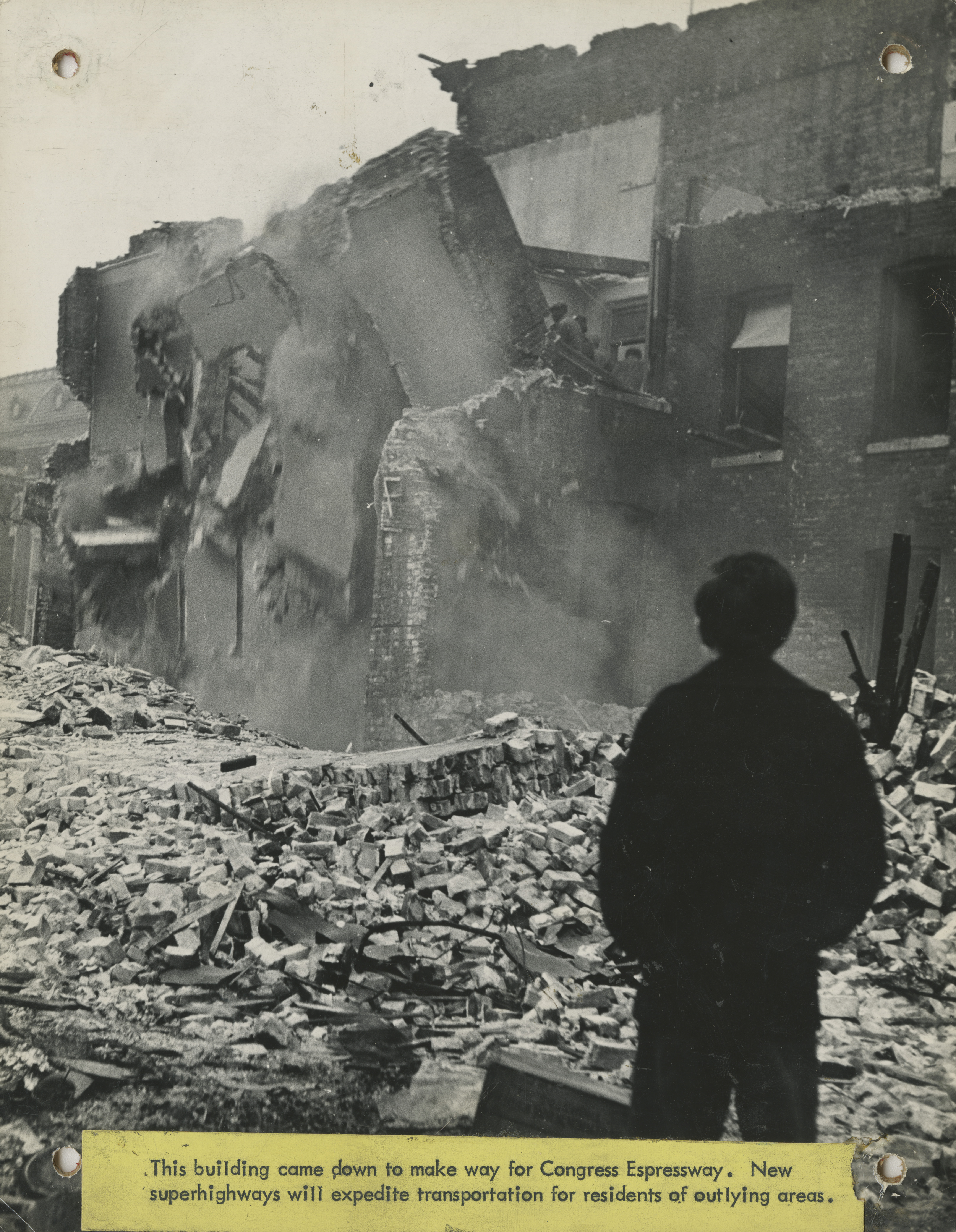
The Eisenhower Expressway (Interstate 290) opened its first section on December 15, 1955, in Chicago, with completion by 1961. Some families left for larger homes west of the city, but others, including businesses, were forced out and residential and commercial areas had to be demolished to make way for its route. Renamed in 1964 to honor President Dwight D. Eisenhower, his administration began the development of America’s interstate highway system. Today, the CTA Blue Line Station mediates between inbound and outbound lanes of the route that Chicagoans fondly call “The Ike.”

Chicago Department of Urban Renewal Records, Box 29, Folder 14, Special Collections, Chicago Public Library.
Chicago Department of Urban Renewal Records, Box 106, Folder 22, Special Collections, Chicago Public Library.
Then there is the Kennedy Expressway, which made its debut on November 5, 1960, to serve the growing needs of Northwest suburbanites and Chicagoans as well as travelers coming to and from O’Hare International Airport to reach the Chicago Loop. The expressway was originally named the Northwest Expressway. During John F. Kennedy’s visits to Chicago, crowds would gather along the expressway just to catch a glimpse of the presidential motorcade. Just three years later, it would be renamed in Kennedy’s honor after his passing.
The Dan Ryan Expressway (Interstate 90 and 94) opened on December 15, 1962, with the intention of reducing accidents and alleviating traffic congestion for commuters traveling to the downtown area from the South Side of Chicago and the south suburbs. Impressively, the Dan Ryan boasts up to 14 lanes wide! The CTA Red Line serves as a median between the inbound and outbound lanes between Sox-35th and 95th Street Stations. The expressway was named after Cook County Board President Dan Ryan Jr and was previously known as the South Expressway.
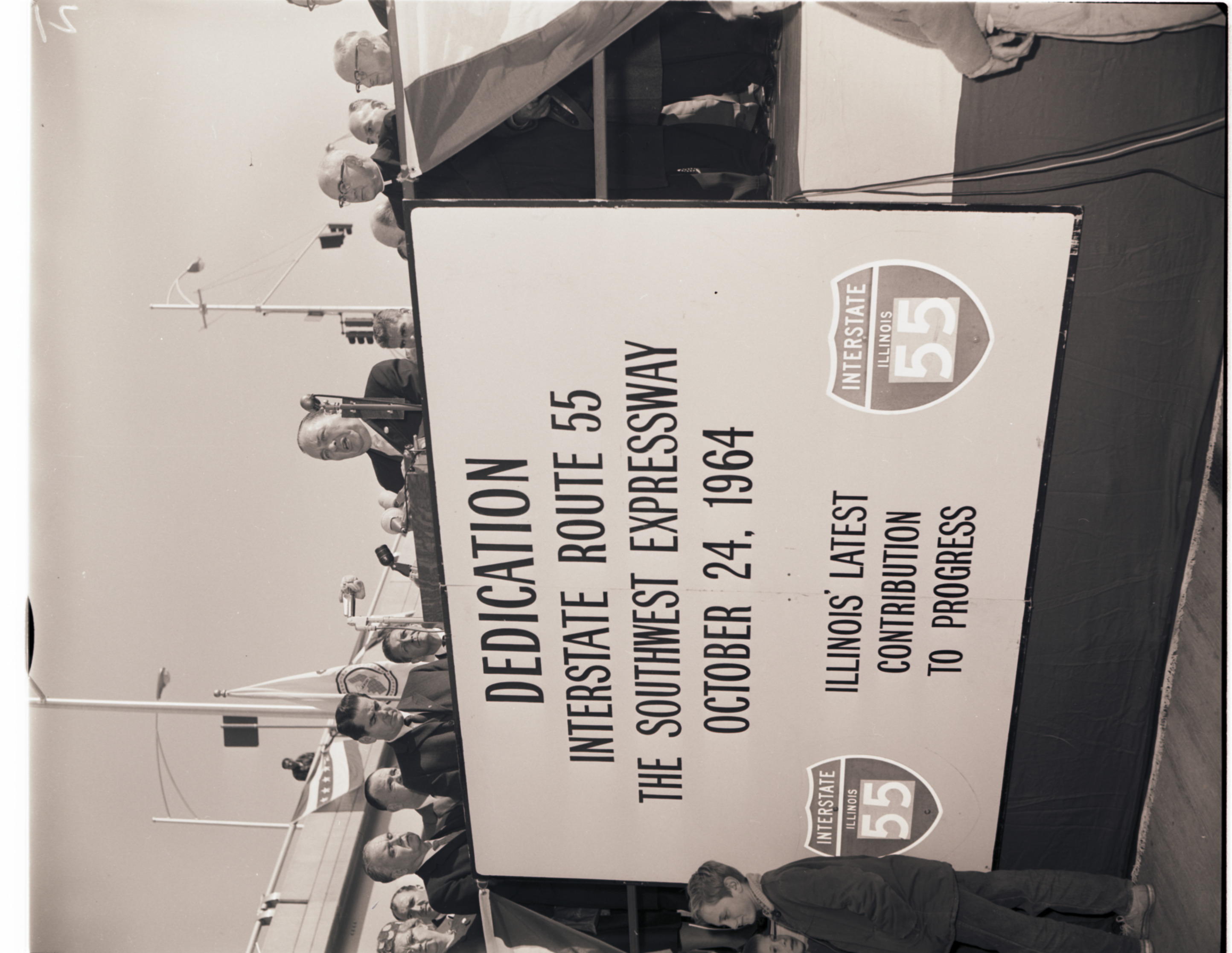
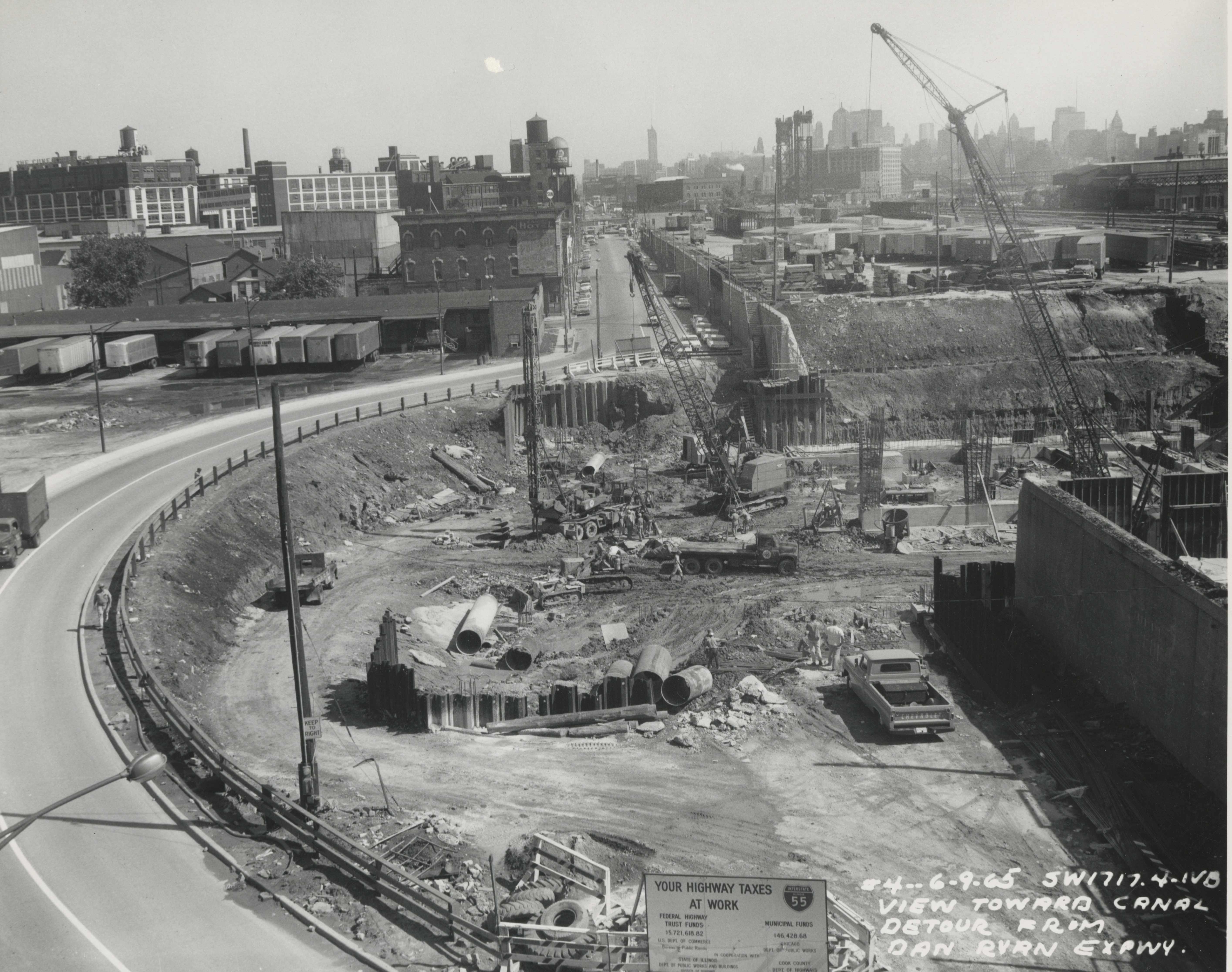
Chicago Department of Urban Renewal Records, Box 29, Folder 17, Special Collections, Chicago Public Library.
The Stevenson Expressway (Interstate 55), with its first segment opening in 1964, was originally called the Southwest Expressway. It was renamed in 1965 to honor Illinois Governor and American Ambassador to the United Nations Adlai Stevenson. As with other expressways, the Stevenson expressway contributed to suburban growth, particularly in the southwest suburbs and was the final section added to Chicago's extensive highway system.
Chicago’s expressways represent a significant chapter in the city’s history, reshaping the landscape and the daily lives of residents due to the rise of automobiles and suburbs. However, these urban renewal projects displaced more than 81,000 people, disproportionately affecting Black residents. This legacy still impacts the city today and the expressway system has evolved with new technologies to meet the needs of motorists. Do you think expressways have achieved their intended purpose of making car travel more convenient, faster and safer? Is the cost of building expressways worth what has been lost in the process? We would love to hear your thoughts in the comments!

Add a comment to: Connecting Chicago for Over 70 Years: Expressways!